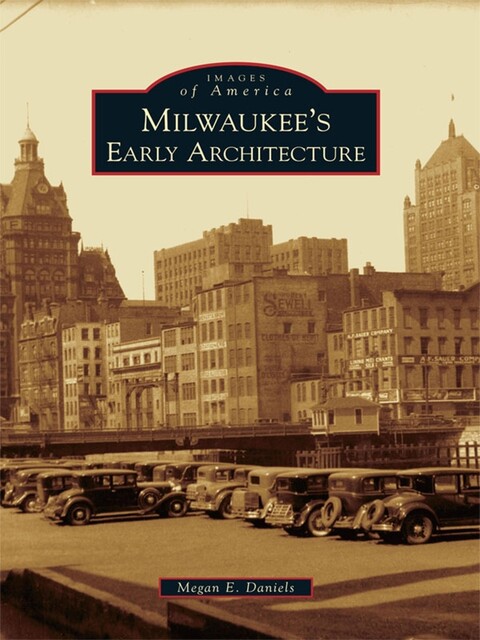
Initially dominated by simple renditions of East Coast architecture, Milwaukee developed from three pioneer settlements, those of Solomon Juneau, Byron Kilbourn, and George Walker�three hubs from which three villages radiated outward into one city. Following the Civil War, Milwaukee�s growth at the onset of the Industrial Era afforded the city a fanciful array of Victorian streetscapes. The 1890s followed with an era of ethnic architecture in which bold interpretations of German Renaissance Revival and Baroque designs paid homage to Milwaukee�s overwhelming German population. At the turn of the century, Milwaukee�s proximity to Chicago influenced the streetscape with classicized civic structures and skyscrapers designed by Chicago architects. World War I and the ensuing anti-German sentiment, as well as Prohibition, inevitably had adverse effects on �Brew City.� By the 1920s, Milwaukee�s architecture had assimilated to the national aesthetic, suburban development was on the rise, and architectural growth would soon be stunted by the Great Depression.